
Kitchen Gadgets learning guide
How to Choose Peelers for Small Kitchens: A Practical Guide for 2026
This is the guide I would want before opening ten Amazon tabs. It explains how to think about peelers, what details are easy to miss, and how to avoid buying something that looks useful but does not fit your real routine.

Example product to compare
OXO Good Grips Y-Peeler
This guide is informational first, but it helps to compare the advice against a real product. OXO Good Grips Y-Peeler gives you a concrete reference point for peelers features, sizing, upkeep, and current Amazon pricing.
Check Price on AmazonWhen research turns into a shortlist
Use the advice on three real product pages
Once the basics make sense, I would stop reading broad advice and compare a few real listings. For peelers, I would start with OXO Good Grips Y-Peeler, then use Kuhn Rikon Original Swiss Peeler and Good Grips Swivel Peeler as reality checks.
The goal is not to force one answer. It is to see which product actually matches your space, maintenance tolerance, budget, and current Amazon listing.
Quick answer
How to Choose Peelers for Small Kitchens is really a question about fit. The right answer depends on where you will use peelers, how often you will reach for it, and whether the upkeep matches your patience level.
My short answer is this: start with the boring details. Check capacity, dishwasher-safe parts, and counter footprint before you get excited about colors, bundles, discount badges, or a long feature list.
A kitchen gadget earns its keep the way a good knife does: by getting grabbed often without making the cook think twice. That is the standard I use in this guide. If a product cannot survive normal use in apartments, family kitchens, coffee bars, meal-prep routines, and quick lunches, it is not a strong recommendation no matter how good the listing looks.
How I think about peelers in real life
I do not start with the fanciest feature. I start with the moment when the product has to earn its place. For peelers, that moment usually happens after the first week, when the novelty is gone and the product has to fit into a normal routine.
I test the imaginary Tuesday night version of the product: tired, hungry, short on counter space, and not in the mood to scrub five parts. That is where many Amazon purchases either become useful or quietly disappear into a drawer, closet, cabinet, garage shelf, trunk, nursery basket, gym corner, or storage bin.
The first practical test is friction. Does the product take too long to set up? Does it need more space than expected? Is it easy to clean? Are replacement parts obvious? Can another person in the house understand it without a tutorial?
The second test is repeat value. A product that solves one dramatic problem once may still be worth buying, but most people are happier with tools that solve small problems often. That is why I compare OXO Good Grips Y-Peeler with Kuhn Rikon Original Swiss Peeler and Good Grips Swivel Peeler instead of treating one listing as the full answer.
The third test is ownership cost. Price is only the front door. Filters, pads, batteries, refills, accessories, cleaning time, floor space, and return hassles are part of the real cost too. A slightly higher price can be the better deal when the product is easier to live with.
The six details I check before buying
Capacity
Capacity changes how peelers feels after the first few uses. I compare this detail on OXO Good Grips Y-Peeler and nearby alternatives before I trust the rating score.
Dishwasher-safe Parts
Dishwasher-safe Parts changes how peelers feels after the first few uses. I compare this detail on Kuhn Rikon Original Swiss Peeler and nearby alternatives before I trust the rating score.
Counter Footprint
Counter Footprint changes how peelers feels after the first few uses. I compare this detail on Good Grips Swivel Peeler and nearby alternatives before I trust the rating score.
Blade or Basket Design
Blade or Basket Design changes how peelers feels after the first few uses. I compare this detail on Vegetable Peelers with Ultra-Sharp Stainless Steel Swivel Blades, Non-Slip Soft-Touch Handle, Protective Covers, 2-Piece Set, Dish and nearby alternatives before I trust the rating score.
Controls
Controls changes how peelers feels after the first few uses. I compare this detail on Vegetable Peeler for Kitchen, Potato Peelers for Fruit Straight Blade, Durable Non-Slip Handle, Set of 2 and nearby alternatives before I trust the rating score.
Storage
Storage changes how peelers feels after the first few uses. I compare this detail on Pisol Kitchen Unique Gadgets Set 6 Pieces, Space Saving, Cheese Grater, Bottle Opener, Fruit Vegetable Peeler, Pizza Cutter, Garli and nearby alternatives before I trust the rating score.
These details may sound basic, but that is the point. Most bad purchases are not bad because the product has zero value. They are bad because one ordinary detail was wrong for the person buying it.
If you are comparing options quickly, write those six details on a note and check each listing against them. You will spot weak picks faster than if you only sort by rating, discount, or number of reviews.
Common mistakes to avoid
Mistake 1: buying for the fantasy routine. Do not buy for the version of yourself who has endless time, perfect storage, and no mess. Buy for the routine you actually have.
Mistake 2: ignoring size. Measurements are boring until the product does not fit. Check the cabinet, shelf, desk, drawer, trunk, room, counter, or storage spot first.
Mistake 3: skipping recent reviews. Old reviews can be useful, but recent reviews catch seller changes, packaging issues, updated versions, and quality shifts.
Mistake 4: confusing popular with right. A popular product may still be wrong for small kitchens. Read for your situation, not for the crowd.
Mistake 5: forgetting maintenance. If you do not want to handle counter footprint, blade or basket design, or basic cleanup, choose the lower-maintenance option.
Mistake 6: waiting until the return window is almost over. Test the product immediately. Use it in the real place, with the real routine, and with the real level of patience you will have later.
Practical checklist before you buy
- Measure the space. Confirm that peelers fits where it will actually live, not just where you imagine using it.
- Check the maintenance. Look for filters, refills, pads, blades, bags, batteries, cords, brushes, cleaning steps, and replacement parts.
- Read the bad reviews. One angry review is noise. Ten reviews naming the same problem are a warning.
- Compare the included accessories. Bundles change. Make sure the current listing includes the parts shown in the photos.
- Think about who will use it. A product that only one person understands often gets used less.
- Test it early. Use the return window like a real trial, not like a receipt you forget about.
My step-by-step decision framework
When I am comparing peelers, I do not jump straight to the product with the biggest discount. I move through a simple sequence. It slows the decision down for a few minutes, but it prevents the kind of purchase that looks smart online and feels wrong at home.
Step 1: Name the exact job
Write down the job in plain language. Not "I need something better." Something specific. For example: I need this to work in apartments, family kitchens, coffee bars, meal-prep routines, and quick lunches without creating extra cleanup, extra storage trouble, or extra setup time. That sentence becomes the filter for every product you compare.
This matters because Amazon pages are built to make every option look broadly useful. Your job is to make the decision narrow again. If the product does not solve the exact job, the rest of the features are just decoration.
Step 2: Check the physical fit
Before I care about reviews, I check the physical realities: capacity, dishwasher-safe parts, and storage. A product that does not fit your room, drawer, shelf, bag, cabinet, car, desk, or routine will feel like a mistake even if it is well made.
Think of fit like parking a car. The best engine in the world does not help if the vehicle cannot fit in the garage. Peelers works the same way. Space beats hype.
Step 3: Compare upkeep before features
Upkeep is where people get surprised. A feature can sound useful, but if it adds extra washing, charging, app checks, replacement parts, refills, filters, blades, pads, bags, batteries, or storage steps, the feature has a cost.
I compare OXO Good Grips Y-Peeler against Kuhn Rikon Original Swiss Peeler by asking one boring question: what will this ask from me after the first week? If the answer feels heavier than the benefit, I move on.
Step 4: Read negative reviews like a pattern report
Do not read bad reviews for entertainment. Read them for repetition. If one person complains about counter footprint, that might be a one-off problem. If twenty people mention the same thing in recent reviews, that is a buying signal.
I pay special attention to reviews with photos and reviews from people using the product in a similar way. A buyer using peelers in a tiny apartment, busy kitchen, pet-heavy room, nursery, car, patio, or home office may be more relevant than a glowing review from someone with a completely different setup.
Step 5: Compare the middle option
The cheapest and most expensive options are easy to understand. The middle option is where the best value often hides. Compare the middle pick against OXO Good Grips Y-Peeler, Kuhn Rikon Original Swiss Peeler, and Good Grips Swivel Peeler. Ask what you actually gain by paying more and what you actually lose by paying less.
If the premium product adds features you will use every week, it can be worth it. If it adds features you only admire on the product page, save the money.
Step 6: Check the return-window test
The return window should not be passive. I treat it like a short trial. Use the product in the exact place and routine where it must perform. Do not test it on a perfect day when you have extra time. Test it on a normal day.
If peelers feels annoying during the test, believe that feeling. Most products do not become less annoying with repetition. The small friction usually gets louder.
How the right choice changes by use case
The best choice for peelers depends on the person using it. That is why I avoid one-size-fits-all recommendations when the better answer is usually "it depends, but here is what it depends on."
For small kitchens
Focus on capacity and counter footprint. This use case usually rewards a product that is easy to repeat, easy to clean, and not too fussy. If the product adds steps every time you use it, the benefit fades quickly.
For meal prep beginners
Space and storage matter more here. I would measure first, then compare product photos against the real spot where the item will live. A compact product that is used often beats a larger product that gets shoved away and forgotten.
For busy families
Durability and maintenance become more important. Look at recent reviews for wear, cleaning, battery life, replacement parts, and customer support. A product that handles gentle use may still struggle when it becomes part of a busier routine.
For college apartments
This is where comfort, control, or surface compatibility can matter. I would compare the product details carefully and avoid assuming the most popular option fits a more specific setup.
For healthy cooking
Look for products with fewer failure points. Simpler controls, easier cleaning, clear instructions, and obvious replacement parts can matter more than a long list of modes or attachments.
For coffee lovers
Think about long-term storage and repeat use. If the product is awkward to put away, hard to clean, or easy to misplace, it may not survive normal ownership even if it works well once.
Real-world examples that make the decision easier
The "small annoyance every day" example
Imagine a product that technically works, but takes an extra minute to set up every time. That minute feels harmless on day one. After a month, it becomes the reason the product stays unused. With peelers, I treat tiny daily annoyances as serious buying signals.
This is why I keep coming back to capacity and blade or basket design. If the product is hard to store, hard to clean, or hard to reset, the benefit has to be large enough to justify that friction.
The "shared household" example
If more than one person will use the product, simplicity matters. A product that only one person understands becomes that person's chore. Clear controls, obvious storage, easy cleaning, and predictable setup make peelers more likely to become part of the household instead of one person's private gadget.
That is also why I compare examples like OXO Good Grips Y-Peeler and Kuhn Rikon Original Swiss Peeler through a practical lens. The better product is not always the one with the longest feature list. Sometimes it is the one another person can use correctly without asking three questions.
The "I bought the wrong size" example
Wrong-size purchases are common because listing photos rarely show scale honestly. A product can look compact alone and feel oversized beside your sink, shelf, desk, stroller, closet, trunk, nightstand, patio chair, or kitchen cabinet.
Before buying, I like to measure with something physical. Put a book, box, towel, pan, bag, or piece of paper in the space to represent the size. It sounds almost silly, but it catches mistakes that spec tables do not make obvious.
The "cheap option became expensive" example
A cheaper product can be a great buy. It can also become expensive if it needs replacement parts sooner, wastes time, creates returns, or makes you buy the better product later anyway. Cheap is strongest when the product has fewer failure points and the use case is simple.
When I compare prices, I ask what the product will cost in attention. If it needs constant fixing, cleaning, moving, charging, or explaining, the discount starts to shrink.
The "premium option was overkill" example
The opposite mistake is just as common. A premium product can solve problems you do not have. If your routine is simple, a mid-range pick may be easier to justify than the most advanced version.
Premium is worth paying for when it removes friction you feel often. It is not worth paying for when the feature only sounds impressive in the comparison chart.
A simple maintenance and ownership schedule
Most people do not need a complicated system. They need a rhythm. The schedule below is the one I mentally use when deciding whether peelers will be easy to own.
| When | What to check | Why it matters |
|---|---|---|
| Right after delivery | Accessories, packaging, size, instructions, and visible damage | This is when returns are easiest and missing parts are simplest to catch. |
| First real use | Capacity, dishwasher-safe parts, and comfort in your actual space | The product must work in real conditions, not just on a clear counter or empty floor. |
| After one week | Counter Footprint, cleaning steps, storage, and whether you still want to use it | This is when novelty wears off and ownership friction becomes visible. |
| Monthly | Wear, loose parts, filters, blades, pads, batteries, cords, or app settings | Small checks prevent the product from becoming unreliable or unpleasant. |
| Before replacing | Replacement parts, warranty, support, and whether a different style would solve the problem better | Sometimes the answer is a part. Sometimes it is a better-fitting product. |
If that schedule sounds like too much work for the product you are considering, that is useful information. It means you should choose a simpler option or skip the category entirely.
Examples worth comparing while you learn
| Product | Useful for | Check first | Review |
|---|---|---|---|
| OXO Good Grips Y-Peeler | meal prep | capacity | Read review |
| Kuhn Rikon Original Swiss Peeler | meal prep | dishwasher-safe parts | Read review |
| Good Grips Swivel Peeler | meal prep | counter footprint | Read review |
| Vegetable Peelers with Ultra-Sharp Stainless Steel Swivel Blades, Non-Slip Soft-Touch Handle, Protective Covers, 2-Piece Set, Dish | meal prep | blade or basket design | Read review |
| Vegetable Peeler for Kitchen, Potato Peelers for Fruit Straight Blade, Durable Non-Slip Handle, Set of 2 | meal prep | controls | Read review |
Product photos worth comparing
Photos are useful for quick reality checks: scale, accessories, materials, and storage shape. A product can be highly rated and still be the wrong size or style for your routine.
OXO Good Grips Y-Peeler
 Kuhn Rikon Original Swiss Peeler
 Good Grips Swivel Peeler
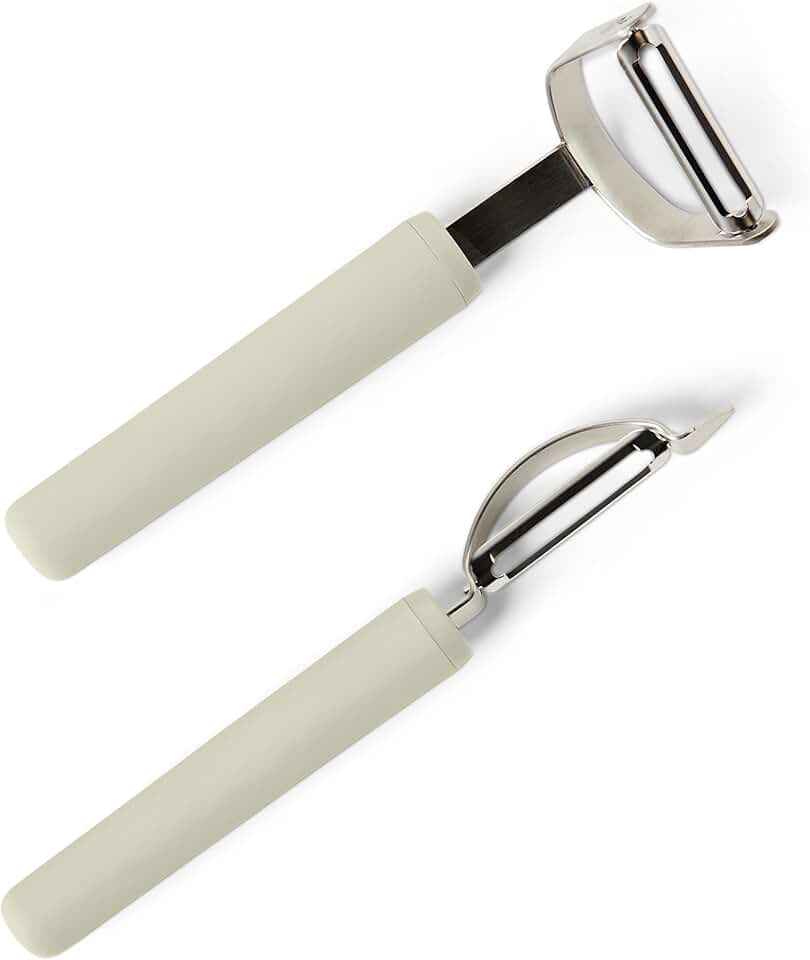 Vegetable Peelers with Ultra-Sharp Stainless Steel Swivel Blades, Non-Slip Soft-Touch Handle, Protective Covers, 2-Piece Set, Dish
 Vegetable Peeler for Kitchen, Potato Peelers for Fruit Straight Blade, Durable Non-Slip Handle, Set of 2
 Pisol Kitchen Unique Gadgets Set 6 Pieces, Space Saving, Cheese Grater, Bottle Opener, Fruit Vegetable Peeler, Pizza Cutter, Garli
The products I would actually compare side by side
I like opening a few real listings while I read a guide, because the useful details show up faster that way: size, cleaning, storage, accessories, and whether the reviews match the way the product will be used at home. These picks are the ones I would keep nearby while deciding what matters most for peelers.
Compare #1
OXO Good Grips Y-Peeler
OXO Good Grips Y-Peeler is a practical kitchen gadgets pick for meal prep, with a clear job to do and enough buyer interest to be worth a closer look.
- Clear time-saving benefit.
- Useful reference point while comparing specs.
- Counter space and cleanup time can matter as much as features.
- May not fit every space, routine, or budget.
Compare #2
Kuhn Rikon Original Swiss Peeler
Kuhn Rikon Original Swiss Peeler is a practical kitchen gadgets pick for meal prep, with a clear job to do and enough buyer interest to be worth a closer look.
- Clear time-saving benefit.
- Useful reference point while comparing specs.
- Counter space and cleanup time can matter as much as features.
- May not fit every space, routine, or budget.
Compare #3
Good Grips Swivel Peeler
Good Grips Swivel Peeler is a practical kitchen gadgets pick for meal prep, with a clear job to do and enough buyer interest to be worth a closer look.
- Clear time-saving benefit.
- Useful reference point while comparing specs.
- Counter space and cleanup time can matter as much as features.
- May not fit every space, routine, or budget.
Compare #4
Vegetable Peelers with Ultra-Sharp Stainless Steel Swivel Blades, Non-Slip Soft-Touch Handle, Protective Covers, 2-Piece Set, Dish
Vegetable Peelers with Ultra-Sharp Stainless Steel Swivel Blades, Non-Slip Soft-Touch Handle, Protective Covers, 2-Piece Set, Dish is a practical kitchen gadgets pick for meal prep, with a clear job to do and enough buyer interest to be worth a closer look.
- Clear time-saving benefit.
- Useful reference point while comparing specs.
- Counter space and cleanup time can matter as much as features.
- May not fit every space, routine, or budget.
How to use the return window wisely
When the product arrives, do not leave it in the box until the weekend after next. Open it, inspect it, and try it in the exact place where it will be used. A return window is not just a policy. It is your chance to test the purchase against real life.
Check the fit first. Then check noise, weight, setup time, cleaning steps, storage, accessories, and whether another person in the home can use it without help. If the product creates a small irritation on day one, that irritation usually gets bigger by day thirty.
I also keep the packaging until I know the product is staying. That may sound fussy, but it makes returns easier and gives you a little pressure to test the item properly instead of letting it drift into the background.
FAQ
How to Choose Peelers for Small Kitchens?
Start by matching peelers to your real use case. Then compare capacity, dishwasher-safe parts, and current buyer feedback before choosing.
What should I look for in peelers?
Look for capacity, dishwasher-safe parts, counter footprint, blade or basket design, plus the return policy and the cost of any parts you will replace later.
How do I know if peelers are good quality?
Quality usually shows in fit, materials, repeated-use comfort, easy cleaning, and consistent recent reviews. I also compare the product against real examples like OXO Good Grips Y-Peeler before trusting the listing.
Should I buy the cheapest peelers?
Sometimes, but only when the cheap option still fits your space and routine. If the cheaper pick creates extra maintenance or breaks faster, the discount was not really a discount.
How should I compare Amazon reviews?
Read reviews from people who use the product the same way you will. Focus on repeated complaints, photos, sizing notes, and comments about support or replacement parts.
What is the safest next step?
Read the related buying guide, compare a few product reviews, then open the Amazon listing only after you know the features you actually need.
Helpful video to compare real use
This category-level video helps you see product behavior, scale, setup, or real-life use before you rely only on listing photos.

Watch this video on YouTube or search YouTube for peelers tips.
Official and authority links
Use these references to check safety guidance, official product support, category rules, and recent hands-on videos before you buy.
Last updated May 17, 2026. Always confirm current Amazon listings, included accessories, seller details, and recent reviews before buying.